Day 1 of the Tungnath–Chandrashila–Deoria Tal Trek begins with an early morning departure from Haridwar, followed by a scenic drive of approximately 190–210 km to Sari Village, the gateway to Deoria Tal. The journey takes around 7–8 hours, depending on road and traffic conditions. The route follows Haridwar → Rishikesh → Devprayag → Srinagar → Rudraprayag → Agastyamuni/Kund → Ukhimath → Sari Village, gradually leaving the plains behind and entering the magnificent Garhwal Himalayas.
The first part of the drive from Haridwar to Rishikesh follows the Ganga before the road begins climbing toward the Himalayan foothills. Beyond Rishikesh, the landscape changes dramatically as the road winds through deep valleys and mountain slopes alongside the Alaknanda River. One of the major highlights is Devprayag, where the Bhagirathi and Alaknanda rivers meet to form the sacred Ganga. Continuing toward Srinagar, the valley becomes wider and greener, with terraced agricultural fields, forest-covered hills, traditional Garhwali villages, and distant mountain ridges creating beautiful views throughout the journey.
From Srinagar, the road continues toward Rudraprayag, another spectacular river confluence where the Alaknanda meets the Mandakini. From here, the route follows the Mandakini Valley toward Kund before turning uphill toward Ukhimath. The surroundings become increasingly peaceful as dense forests of oak, rhododendron, pine, and Himalayan trees cover the mountain slopes. During spring, blooming rhododendrons add brilliant colours to the landscape, while in summer the hills appear lush and green. Autumn brings clearer skies and magnificent Himalayan visibility, while winter can transform the higher areas around Ukhimath and Sari into a beautiful snow-covered landscape.
The final drive from Ukhimath to Sari is along a narrower mountain road with spectacular views of deep valleys, forested ridges, terraced fields, and scattered Himalayan settlements. As you approach Sari Village, the scenery becomes quieter and more remote, with traditional stone houses surrounded by agricultural terraces and mountain forests. Sari, situated at around 2,000 m, is the traditional base for the Deoria Tal trek and offers a peaceful introduction to the Himalayan lifestyle.
On arrival, guests can check into a local homestay or mountain guesthouse, relax after the long drive, and explore the village. If time permits, an evening walk through Sari provides an opportunity to experience local Garhwali culture and enjoy the surrounding mountain scenery. With the fresh Himalayan air, forested slopes, traditional village atmosphere, and distant views toward the high mountains, the journey from Haridwar to Sari is not merely a transfer—it is the beginning of the Tungnath, Chandrashila and Deoria Tal Himalayan adventure.
Day 2 of the Tungnath–Deoria Tal Trek begins from Sari Village at around 2,000 m, with a short but beautiful uphill hike to Deoria Tal, approximately 2,400 m. The round-trip trek is around 5–6 km and generally takes 3–4 hours, allowing plenty of time to enjoy the lake and surrounding Himalayan landscape. The trail starts from the upper part of Sari and initially passes through traditional village houses, terraced fields and small agricultural plots before entering the forest. The first section is a steady uphill climb on a well-defined rocky trail, with occasional openings providing views back toward Sari and the surrounding valleys.
As the trail climbs higher, the landscape gradually changes from cultivated village land to beautiful Himalayan woodland. The route passes through forests dominated by oak, rhododendron and maple, creating a cool and peaceful environment beneath the tree canopy. During the rhododendron flowering season, particularly March and April, the forest becomes exceptionally colourful, with red and pink blooms appearing along the trail. These flowering trees make the walk especially attractive for nature lovers and photographers. The forest also provides habitat for numerous Himalayan birds, and trekkers may encounter species such as Himalayan monal, woodpeckers, flycatchers, Himalayan bulbul and other forest birds.
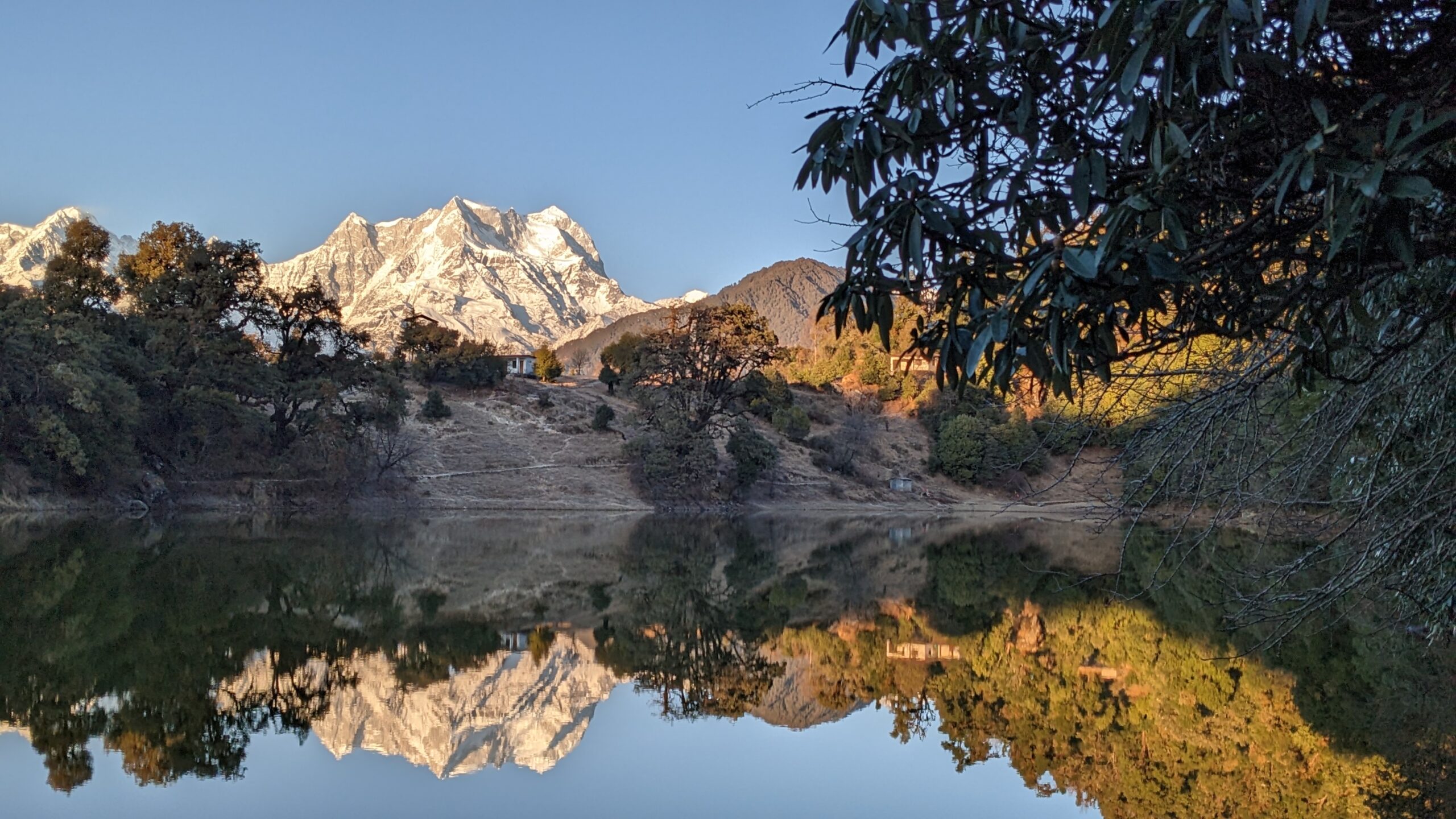
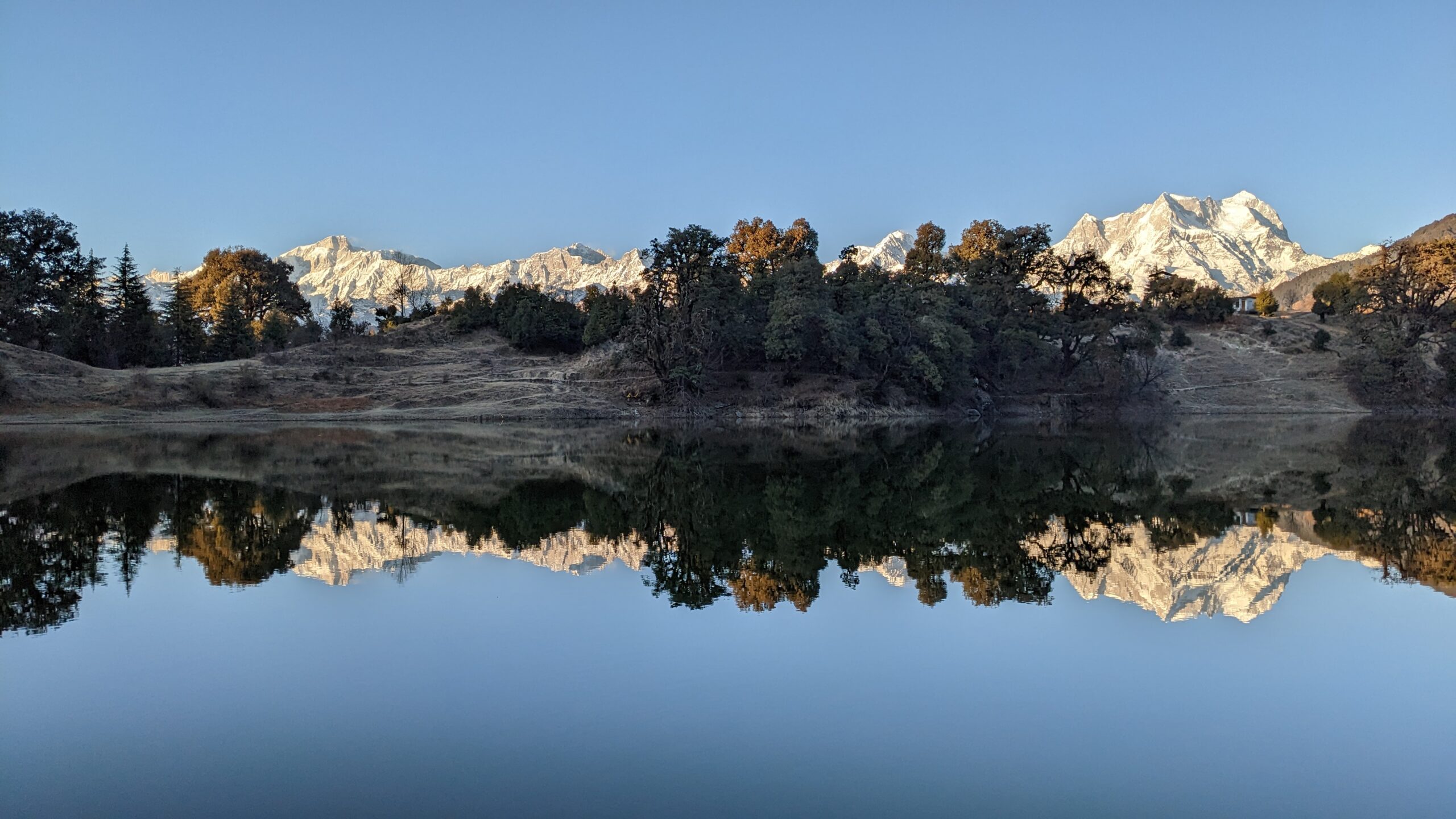
The highlight of the day is undoubtedly Deoria Tal, a serene mountain lake surrounded by green forests and alpine landscapes. On a clear and calm day, the lake becomes a natural mirror, beautifully reflecting the magnificent Chaukhamba massif on its surface. The sight of the snow-covered Chaukhamba peaks rising dramatically behind the lake is one of the most iconic views of the entire trek. The surrounding panorama also includes other Himalayan ranges and peaks, while the peaceful lake, forested slopes and mountain sky create an extraordinary setting for photography and relaxation.
The area around Deoria Tal is also rich in Himalayan flora and fauna. Besides oak, maple and rhododendron, the forest supports various shrubs, herbs, mosses and seasonal wildflowers. Birdwatching is particularly rewarding, while larger Himalayan animals such as barking deer, Himalayan goral, musk deer and langurs inhabit the wider forested region. Wildlife sightings are never guaranteed, but the protected mountain environment provides important habitat for a variety of Himalayan species.
After spending time at Deoria Tal and enjoying the spectacular Chaukhamba reflection, trekkers retrace the same forest trail back toward Sari Village. The descent is comparatively easier and offers a different perspective of the surrounding forests, terraced fields and mountain valleys. Reaching Sari, trekkers can relax at the homestay or campsite and enjoy the peaceful village atmosphere. Day 2 combines a gentle Himalayan forest trek, seasonal rhododendron blooms, rich birdlife and the unforgettable sight of Chaukhamba reflected in the crystal-clear waters of Deoria Tal, making it one of the most scenic introductory days of the Tungnath–Chandrashila adventure.
Day 3 starts very early in the morning and is the most adventurous and rewarding day of the Tungnath–Chandrashila Trek, combining a scenic mountain drive with a challenging high-altitude climb to Chandrashila Summit. The day begins early from Sari Village (around 2,000 m) with a drive of approximately 30 km to Chopta (around 2,680 m), taking nearly 1 hour. The road winds through beautiful Himalayan forests and mountain valleys, passing through dense stands of oak, rhododendron, maple and deodar trees. Chopta is popularly known as the “Mini Switzerland of Uttarakhand” because of its expansive green meadows, forested slopes and spectacular Himalayan surroundings. During the spring season, the rhododendron forests around Chopta burst into vibrant red, pink and crimson flowers, creating a particularly beautiful landscape.
From Chopta, the trek begins along the well-defined stone-paved trail toward Tungnath Temple (approximately 3,680 m). The approximately 3.5–4 km uphill trail is a continuous ascent through beautiful alpine landscapes, taking around 2–3 hours, depending on fitness and weather conditions. The trail initially passes through dense rhododendron and oak forests before gradually opening into alpine meadows as the altitude increases. With every step, the views become wider, revealing magnificent mountain ridges and deep valleys. In spring, colourful rhododendron flowers line sections of the trail, while during summer the meadows become lush green and filled with seasonal Himalayan wildflowers.
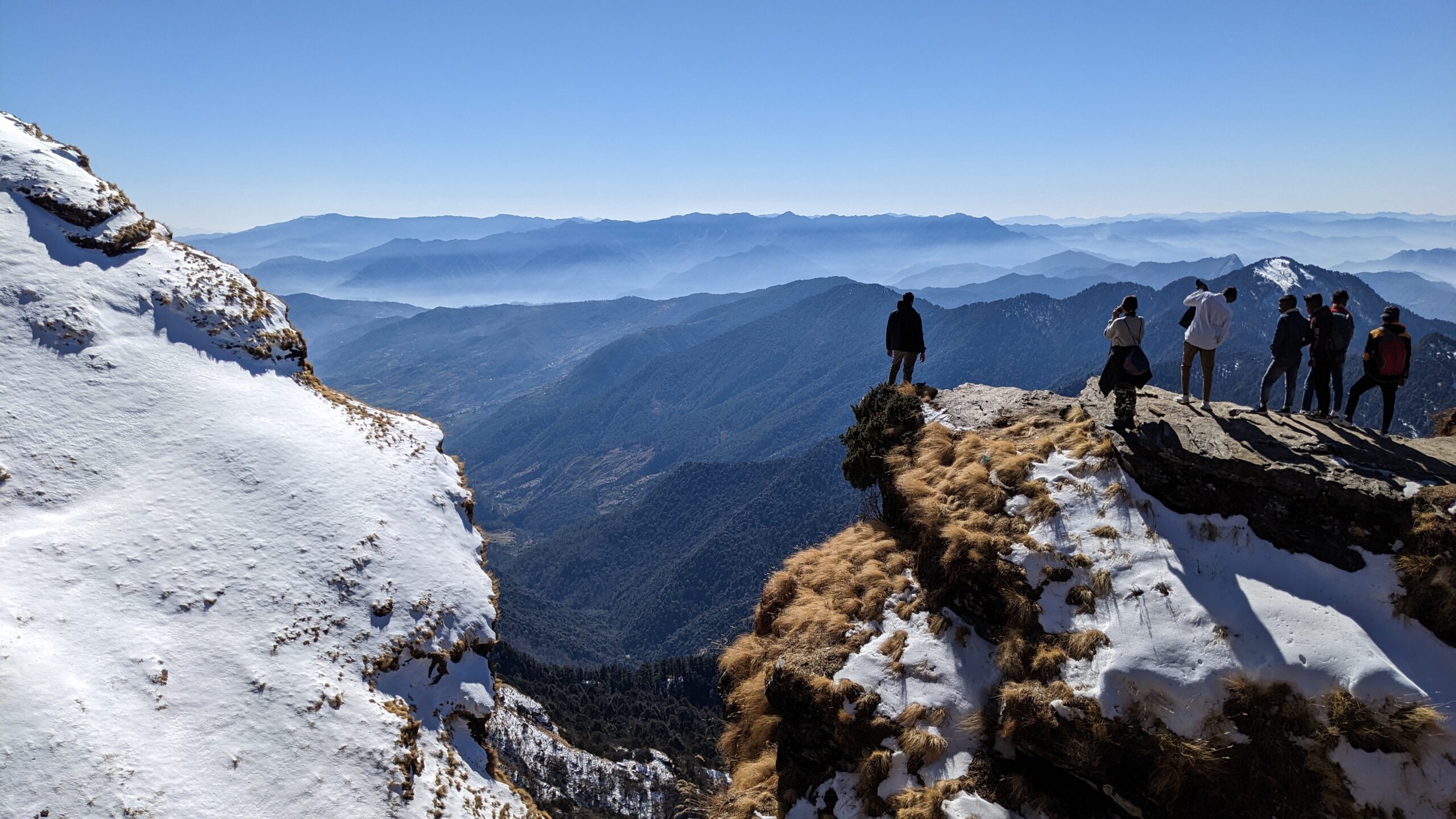
The trail eventually reaches Tungnath Temple, one of the highest Shiva temples in the world and an important pilgrimage site associated with the Panch Kedar. Surrounded by dramatic mountain slopes, ancient stone structures and prayer flags, the temple provides a peaceful place to rest before the final climb. From Tungnath, the route becomes considerably steeper as it climbs approximately 1.5 km toward Chandrashila Summit (around 4,000 m). This final section takes roughly 45–60 minutes and involves steep stone steps and rocky terrain. The effort is demanding, particularly because of the increasing altitude, but the panoramic scenery makes the climb immensely rewarding.
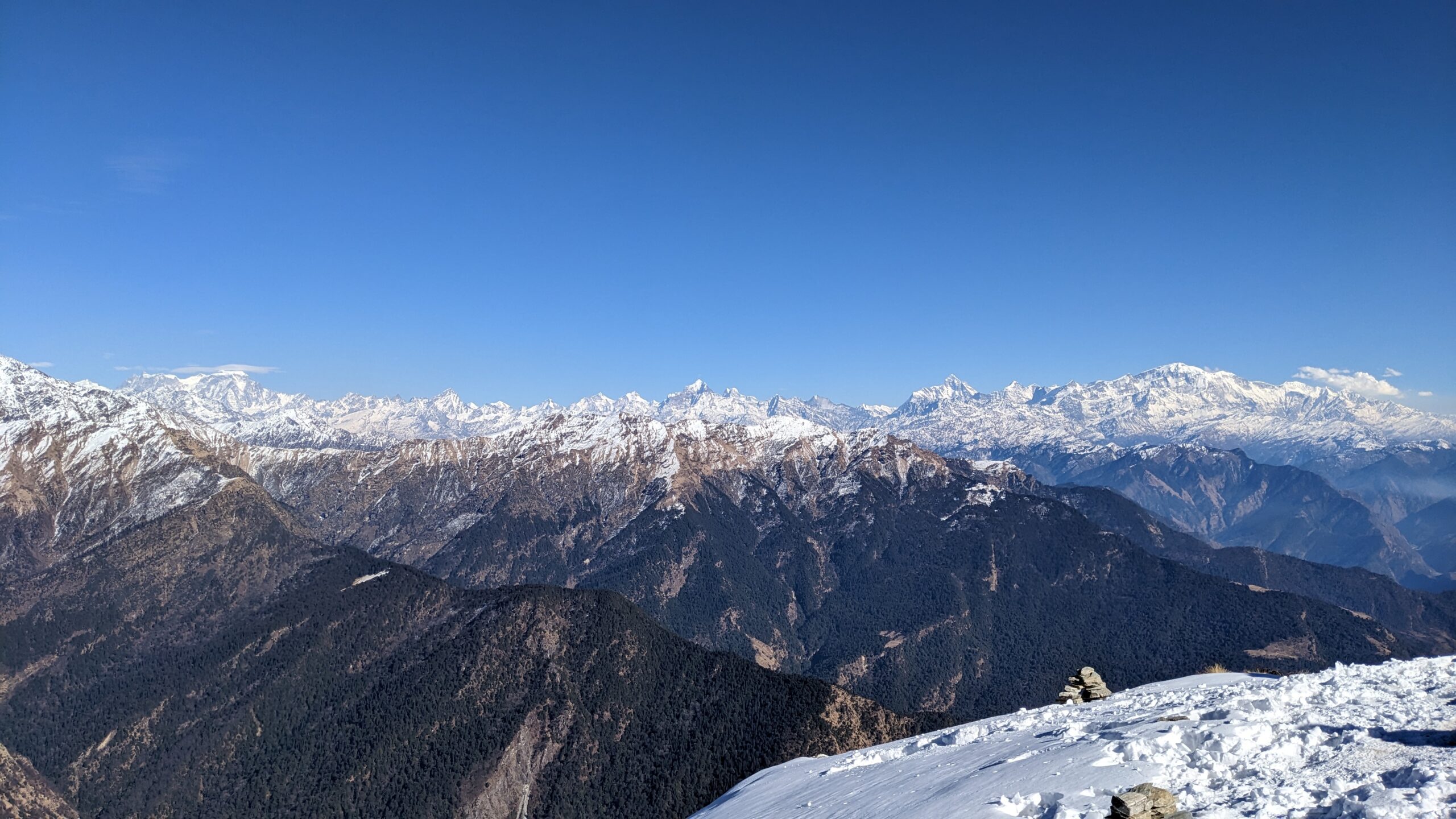
Reaching Chandrashila Summit, trekkers are rewarded with an extraordinary 360-degree Himalayan panorama. On a clear day, the skyline is dominated by magnificent peaks including Chaukhamba, Kedarnath, Kedar Dome, Trishul and Nanda Devi, along with numerous other snow-covered summits of the Garhwal Himalayas. Looking down, the green valleys, forests and meadows of Chopta appear far below, creating a spectacular contrast with the rugged high mountains. Sunrise from Chandrashila is particularly famous, although an early start is essential for clear views and favourable weather.
The high-altitude environment around Chandrashila supports hardy alpine vegetation such as dwarf rhododendron, juniper, alpine grasses, mosses, lichens and seasonal wildflowers. The surrounding forests and meadows provide habitat for Himalayan wildlife including Himalayan monal, koklass pheasant, Himalayan goral, barking deer, musk deer and various mountain birds. Wildlife sightings are occasional and never guaranteed, but the region’s rich biodiversity adds another dimension to the trek.
After spending time at the summit, trekkers descend carefully to Tungnath, continue downhill to Chopta, and then drive approximately 30 km back to Sari Village. The total trekking distance from Chopta to Chandrashila and back is approximately 10 km, requiring around 6–8 hours, while the round-trip drive between Sari and Chopta takes around 2 hours. By evening, trekkers return to Sari after an unforgettable day filled with sacred Himalayan landscapes, rhododendron forests, alpine meadows, dramatic mountain views and the spectacular summit experience of Chandrashila.
Day 4 marks the final day of the Tungnath–Chandrashila–Deoria Tal Trek with Trishul Adventures. After breakfast at Sari Village, the journey begins with a scenic drive back to Haridwar, covering approximately 190–210 km and taking around 7–8 hours, depending on road and traffic conditions. Leaving the peaceful Himalayan village behind, the route descends through the beautiful Garhwal mountains, passing forested hills, terraced fields, traditional villages and winding mountain roads. The journey follows the Mandakini and Alaknanda river valleys, offering spectacular views of deep gorges, flowing rivers and rugged Himalayan slopes.
En route, the drive passes through Ukhimath, Kund, Rudraprayag, Srinagar and Devprayag, where the Bhagirathi and Alaknanda rivers meet to form the sacred Ganga. The changing landscape provides a beautiful conclusion to the adventure, gradually transforming from high Himalayan forests and mountain valleys into the greener foothills around Rishikesh and Haridwar. Along the way, trekkers can look back on the memorable experiences of Deoria Tal, the rhododendron forests of Chopta, the sacred Tungnath Temple and the breathtaking panoramic views from Chandrashila.
On reaching Haridwar, the memorable Tungnath–Chandrashila–Deoria Tal Trek officially comes to an end with Trishul Adventures. With beautiful Himalayan memories, spectacular mountain views and unforgettable trekking experiences, the journey concludes with the promise of returning to the mountains again.
This is an Easy grade trek. If you can walk 5 km comfortably and have a basic level of fitness, you're good to go. A little preparation will make the experience much more enjoyable.
Talk to our trek planners and reserve your spot on Tungnath Chandrashila Deoriatal
WhatsApp Us Now